Wolf cut hair looks effortless but needs a trim every six weeks
A wolf cut stacks choppy crown layers over long wispy ends for that undone look. Here is which face shape it suits, how to style it, and what the trims every six to eight weeks really cost.

A wolf haircut looks like you woke up with perfect messy hair, and that is the whole point. It stacks short, choppy layers at the crown over longer lengths at the bottom, so your hair reads as full, textured, and a little untamed. The catch is the part nobody films. That lived-in shape only holds if you trim it every six to eight weeks.
Stylists describe the wolf cut haircut as a shag and a mullet blended together, with heavy layering up top and wispy length below. It started in South Korea and spread through TikTok and Instagram, and it has stuck around because it flatters a lot of faces and hair types. Before you book, it helps to know which version suits your face, how to style it, and what the upkeep really costs.
What a wolf haircut actually is
The shape has two jobs. Short layers around the crown and face create height and movement, while the longer perimeter keeps length you can still tie back or tuck behind your ears. That contrast between top and bottom is what sets it apart from plain long layers, and it is why the modern mullet and this style get mentioned in the same breath.

You have room to make it yours. A wolf cut long hair version, worn past the shoulders, keeps more of your natural weight and suits thicker hair. A cropped wolf cut short hair take leans punk and needs more daily styling to look intentional instead of overgrown.
The rule of thumb is simple. Volume and choppiness up top, softer length at the bottom, and layers that never sit in a straight line.
Which face shapes a wolf haircut suits
One reason it spread so fast is that it works on almost every face shape once the layers are placed with intent. The trick is where the shortest face-framing pieces land. Put them in the wrong spot and they widen the exact part of your face you wanted to slim.

The best wolf cut for round face balance keeps the face-framing layers below your cheeks, never at cheek level, with curtain bangs that open at the center of your forehead to draw the eye up. A square face does better when the shortest pieces fall to chin length or longer, paired with soft, wispy bangs instead of a blunt fringe. Heart-shaped faces gain balance from layers that hit between the jaw and chin.
Long or oblong faces are the one case where you build fullness at the sides rather than piling height on the crown, and a full fringe or curtain bangs almost becomes a must to shorten the forehead. Not sure which shape you have? Our guide to finding your face shape walks through it in a couple of minutes.
| Face shape | Layers to ask | Bangs that help |
|---|---|---|
| Round | Keep them below the cheeks | Center-parted curtain bangs |
| Square | Chin length or longer | Soft wispy bangs |
| Heart | Between the jaw and chin | Cheekbone-length curtain |
| Oval | Almost any length works | Center or side part |
| Long | Fuller at the sides | Full fringe or curtain |
How it behaves on curly, fine, and thick hair
Texture changes everything about how this cut sits. The same layers that make thick hair dance can thin out hair that is already sparse, so your hair type should steer how heavy the layering goes.
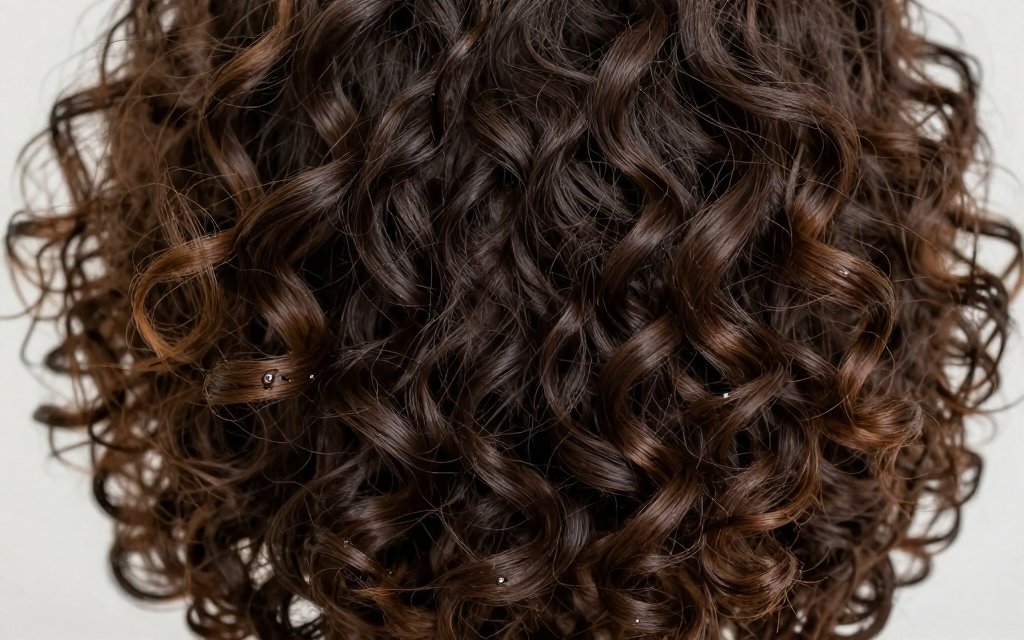
Curly and wavy hair
A wolf cut curly hair combo is a natural fit, because the layers give ringlets room to spring up instead of stacking into a triangle. Diffuse on low heat and scrunch in a little mousse. Very tight coils are the exception, since heavy layers can shrink up shorter than you expect, so ask your stylist to cut curly hair dry.
Fine or thin hair
A wolf cut fine hair pairing is the risky one. The layers that add bounce to thick hair can leave sparse hair looking wispier, so those choppy pieces work against you. If your hair is fine, ask for fewer, softer layers and keep the length shorter so the ends still feel dense.
Thick and coarse hair is the easiest match. The weight holds the shape, and the layers actually lighten a heavy head so it moves instead of sitting like a helmet. If you have a lot of hair, a longer version keeps it from puffing out at the sides.
How to style a wolf cut at home
Styling is where people either fall for this cut or give up on it. The good news is that a messy finish forgives mistakes, so you do not need salon skills to pull it off.
It comes down to lift and texture. Rough dry your roots with your head flipped over, then work a texturizing or sea salt spray through the mid-lengths and ends. A little matte clay or wax breaks up the layers so they look piecey, not fluffy. For no-heat waves overnight, these heatless curl methods give you texture by morning.
Skip the round brush. This cut should look tousled, not blown out and glassy smooth.
What the cut costs and how often to trim
Here is the part that catches people off guard. The cut itself is not the expensive bit, the upkeep is. A women's haircut runs about $45 at a budget salon and around $75 mid-range in 2026, and layered, textured styles like this usually sit in the middle to upper end of that range.
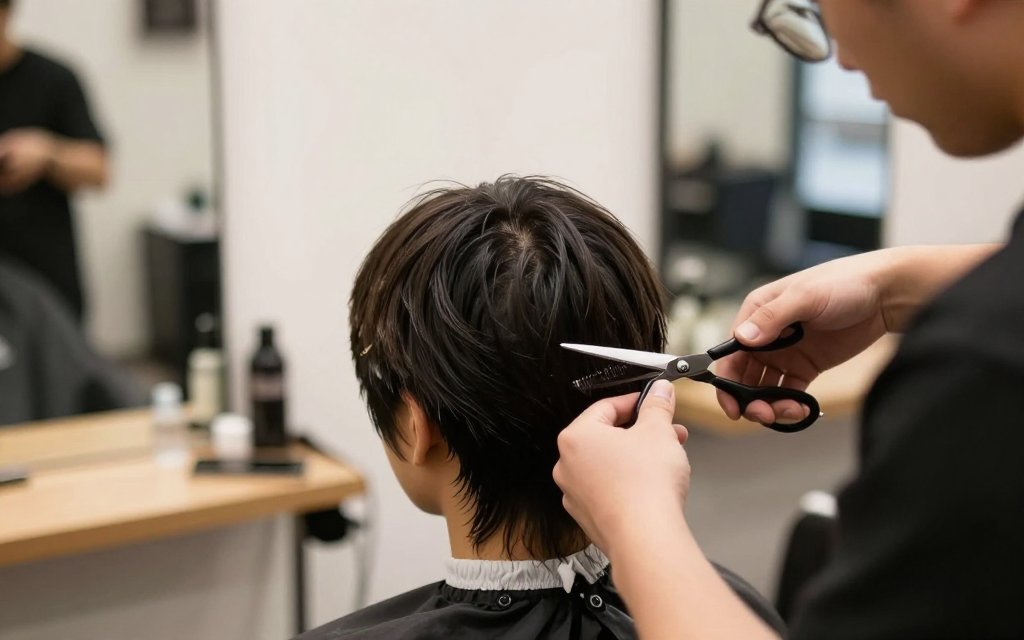
Because the shape relies on sharp layers, it grows out faster than a one-length cut. Most stylists suggest a trim every six to eight weeks to keep the layers defined. That is roughly six to eight visits a year, so a $75 cut plus an 18 to 22 percent tip can add up to $500 or more annually, before you buy a single product.
| Expense | Typical cost | How often |
|---|---|---|
| Salon cut | $45 to $90 | Every 6-8 weeks |
| Tip | 18% to 22% | Every visit |
| Sea salt spray | $10 to $20 | Every 2-3 months |
| Yearly total | $400 to $700 | 6-8 trims |
You can stretch the time between trims by wearing the grown-out layers as a softer shag. Past about ten weeks, though, the crown loses its lift and the shape starts to read shaggy in the wrong way.
Wolf cut vs shag, and how to ask
People blur the two, and they are close cousins. A shag spreads its layers evenly for all-over texture, while this style piles the short, heavy layering at the crown for a bolder top-to-bottom contrast. The wolf leans more mullet, the shag leans more seventies rock.
When you sit in the chair, bring a photo and use plain words. Ask for heavy layers with volume on top and length kept at the bottom, and say how much contrast you want between the shortest and longest pieces. Precise beats poetic here.
Questions people ask before booking
Does a wolf haircut work on fine hair?
It can, but it needs care. Ask for fewer, softer layers and keep the overall length shorter so the ends stay dense. Heavy, choppy layering on very fine hair tends to make it look thinner, not fuller.
Which face shape suits it best?
Oval faces get the most freedom, because almost any version works. Round, square, and heart-shaped faces suit it too, as long as the face-framing layers are placed to balance your proportions rather than widen them.
How often should you trim it?
Every six to eight weeks keeps the layers sharp and the crown full. Stretch past ten weeks and the shape softens into a plain shag, which some people actually prefer as a lower-effort phase.
Is it hard to grow out?
It grows out more gracefully than a mullet or a pixie cut, because the long perimeter is already there. The short crown layers blend into face-framing pieces over a few months, so you are rarely stuck with one awkward stage.
Ready to see how a wolf haircut looks on you before the scissors come out? Try Fravyn and preview this shaggy, layered shape, plus curtain bangs and dozens of other styles, on your own photo in seconds, so you walk into the salon sure of the shape you want. Get the app here: iOS.
Try a New Hairstyle Today
Preview 50+ hairstyles and 29+ colors on your own photo with Fravyn.